In modern Food and Beverage (F&B) operations, true business profitability is rarely determined by peak dinner rush volumes alone. It is decided in the central prep kitchens and cold storage facilities. Industry analytics confirm that casual dining operators regularly lose 15% to 30% of baseline operating margins to untracked food waste, recipe portion variance, and unmonitored shrinkage.
This case study examines how Eatic partnered with an expanding 4-branch casual dining brand backed by a central production facility in New Cairo to eliminate hidden inventory shrinkage and restore tight financial control within 30 days.
1. The Core Operational Problem
Prior to deploying Eatic, the restaurant chain ran fragmented operations with an outdated standalone POS that had no real-time telemetry into raw inventory movements, creating critical vulnerabilities:
- Variance Between Theoretical vs. Actual Food Cost: Without automated recipe deduction at checkout, management only understood ingredient consumption during end-of-month stock audits.
- Overproduction in Central Prep Units: Batching high-cost sauces, cuts, and marinades without predictive branch-level consumption data led to recurring expiration loss.
- Delayed Shrinkage Detection: Identifying operational loss 30 days after occurrence made root-cause accountability impossible.
2. The Strategic Technical Implementation
Eatic deployed an integrated inventory and recipe control architecture across all sites within a structured 14-day sprint:
- Granular Sub-Recipe Mapping: Every ingredient—down to grams and milliliters—was mapped directly to menu items, automating instant ingredient deductions per ticket sale.
- Secure Inter-Branch Logistics Reconciliation: Central kitchen outbound consignments required digital transfer acceptance via barcode verification, eliminating transit shrinkage.
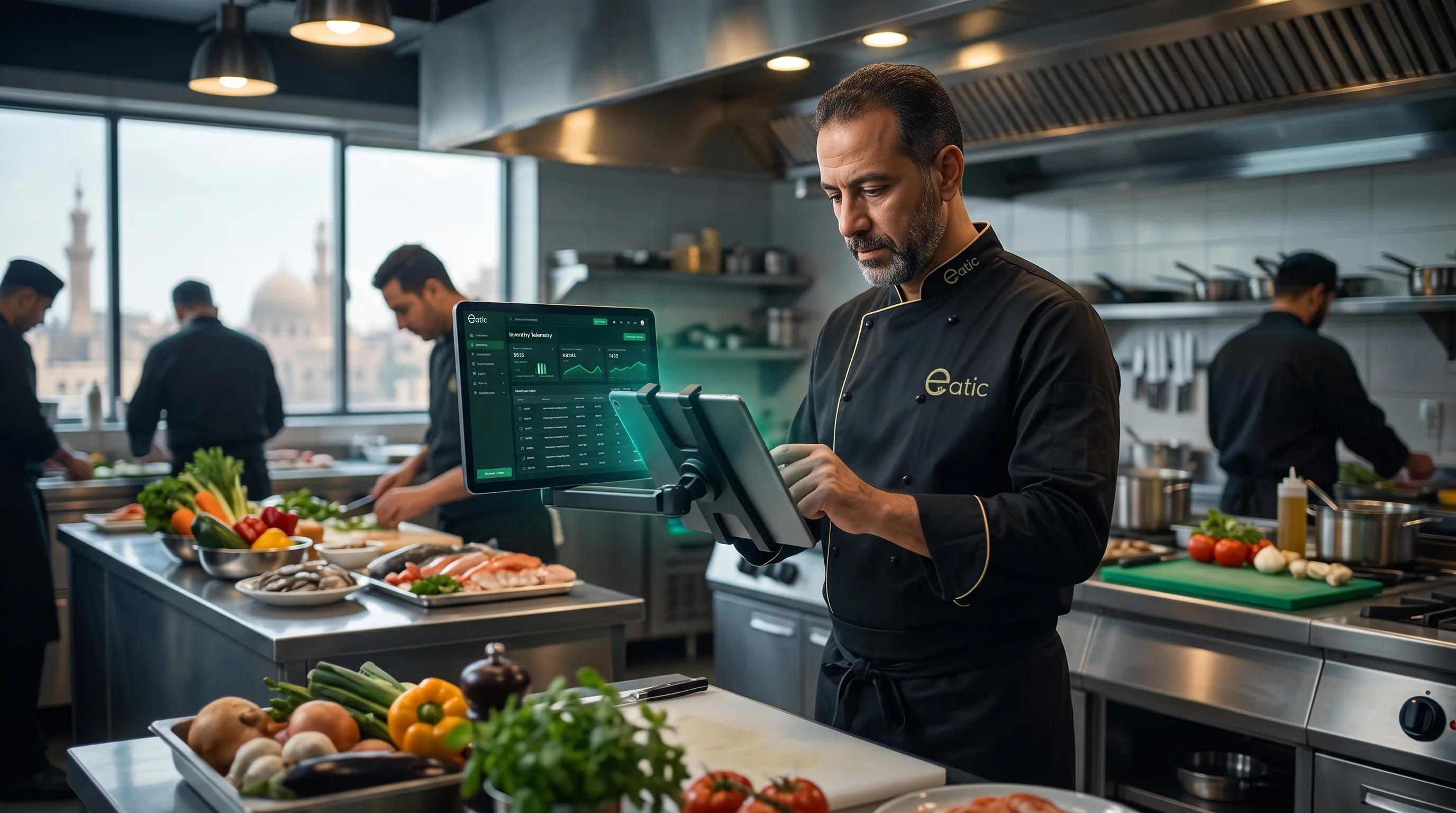
- Real-time Kitchen Waste Telemetry: Equipping kitchen expeditors with low-friction digital interfaces to register damaged goods, burn rates, and prep spoilage on the line instantly.
3. Measurable 30-Day Outcomes
Post-deployment metrics revealed radical operational optimization across all units:
- 28% Direct Reduction in Total Raw Ingredient Waste: Achieved through dynamic prep schedules linked directly to historical POS volume forecasts.
- Variance Gap Narrowed to 2.1%: Reduced variance between physical stock and system records down from an unsustainable 11.4%.
- Immediate Net Cost Recovery Exceeding $3,200 (EGP 160,000+): Recovered primarily across high-value proteins and dairy items within month one.
The Strategic Takeaway for F&B Executives
Operating an enterprise restaurant brand without unified POS-to-inventory recipe control is like running an open tap on your margins. Purpose-built F&B platforms like Eatic eliminate guesswork, transforming volatile kitchen waste into predictable, defensible bottom-line profit.